
If you’re a parent scrolling through college websites at midnight, trying to figure out whether physiotherapy is even a “real” career option for your child — or if you’re a student who’s just cleared 12th with Biology and has no idea what comes next — you’re exactly who this blog is for. Choosing a Physiotherapy BPT course in Greater Noida is one of those decisions that feels huge in the moment, mostly because nobody around you explains it simply. So let’s do that here, without the jargon and without the sales pitch.
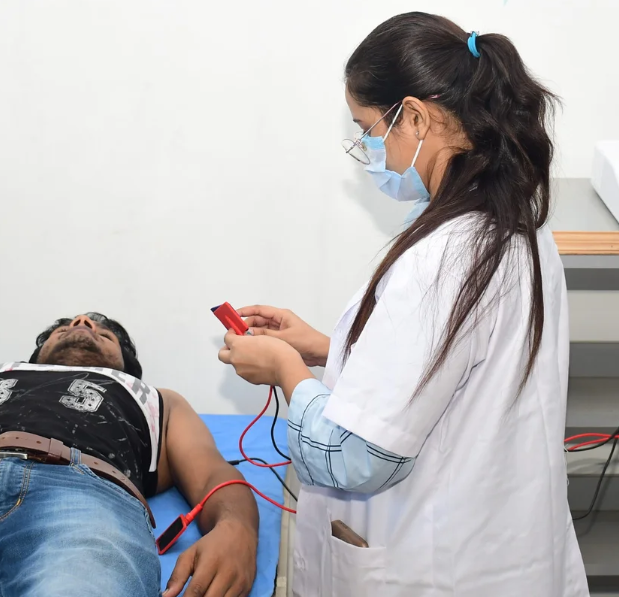
What Exactly Is Physiotherapy, and Why Does It Matter?
Physiotherapy, often just called physio, is the branch of healthcare that deals with movement, mobility, and pain relief — not through medicines, but through physical techniques, exercises, and hands-on therapy. Think of a footballer recovering from an ACL tear, an elderly person relearning to walk after a hip surgery, or a child with a developmental delay who needs help building motor skills. A physiotherapist is the professional standing beside them through that recovery.
This is exactly why a well-structured Physiotherapy BPT course in Greater Noida has become such a sought-after option. Bachelor of Physiotherapy (BPT) is the foundational degree that trains students to become licensed physiotherapists — and with hospitals across NCR actively hiring physio graduates, the timing couldn’t be better for students entering this field.
Why Greater Noida Has Become a Physiotherapy Education Hub
A few years ago, if you wanted a decent physiotherapy degree, you’d have had to look at Delhi or a handful of established universities scattered across the country. That’s changed. Greater Noida, with its cluster of hospitals, medical colleges, and healthcare-focused institutions, has quietly turned into one of the better places in North India to study allied health sciences.
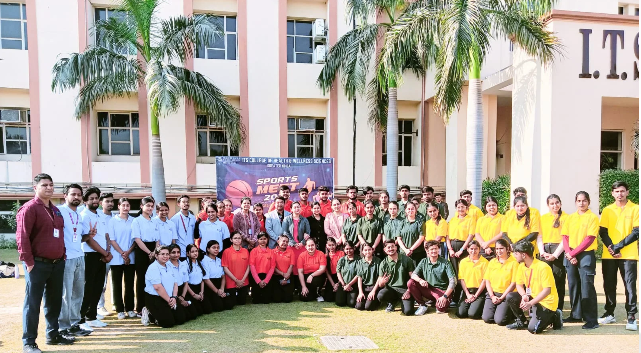
One institution worth knowing about here is I.T.S. College of Health & Wellness Sciences, part of the 29-year-old I.T.S. Education Group. If you’re researching a Physiotherapy BPT course in Greater Noida, this is a name that comes up often, and for good reason. The college isn’t just another new-age institute cashing in on the healthcare boom — it’s backed by a group with a long academic track record, existing hospital partnerships, and infrastructure that’s built specifically for clinical training rather than repurposed classroom space.
What actually makes a physiotherapy college worth choosing isn’t the brochure — it’s three things: qualified faculty, real hospital exposure, and a placement system that works. Let’s go through each one.
Qualified, Experienced Faculty
A physiotherapy degree lives or dies on how well the practical training is delivered. Anyone can teach anatomy from a textbook, but teaching a student how to correctly assess a patient’s gait or apply a therapeutic technique requires faculty who’ve actually practiced. Institutes offering a serious Physiotherapy BPT course in Greater Noida tend to bring in experienced clinicians as visiting faculty, alongside full-time academic staff, so students get both theoretical depth and clinical judgement.
Hospital Collaborations That Actually Mean Something
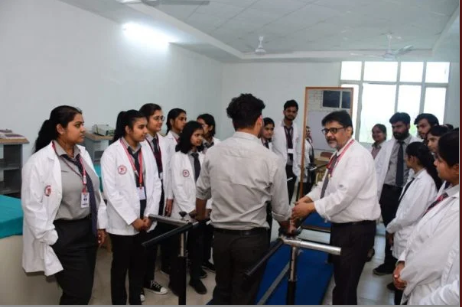
This is the part parents should pay closest attention to. I.T.S. College of Health & Wellness Sciences has tie-ups with Fortis Hospital, Yatharth Hospital, Neumed Hospital, Felix Hospital, and Green City Hospital. Why does this matter so much? Because physiotherapy is a hands-on profession — no amount of classroom learning replaces the experience of observing and assisting real patients under supervision. When you’re comparing options, ask directly: which hospitals will my child actually get to work in during clinical postings? A degree without genuine hospital exposure is, frankly, half a degree.
State-of-the-Art Infrastructure
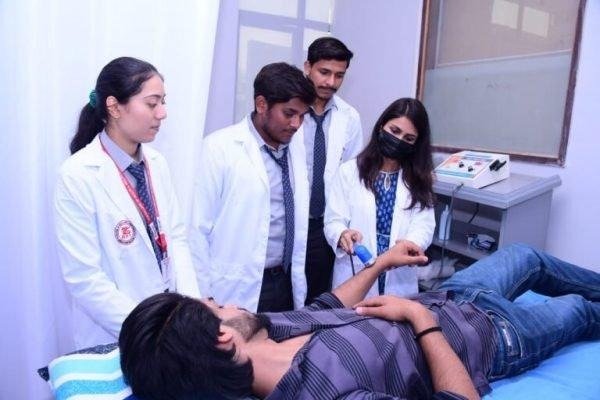
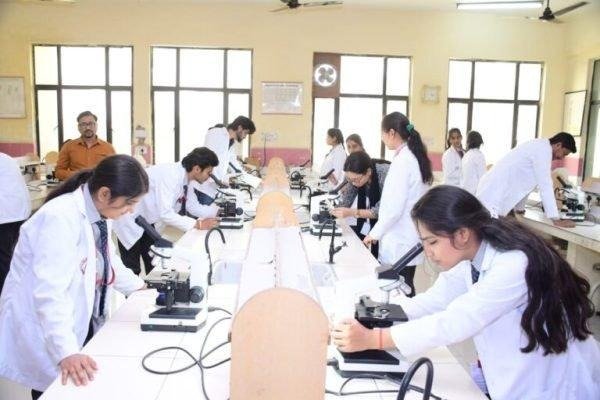
Smart classrooms, dedicated labs, and digital learning tools sound like standard marketing language until you actually walk into a college that lacks them. For a course this practical, infrastructure isn’t a luxury — it’s the difference between a student who’s confident on day one of their internship and one who’s fumbling.
Eligibility Criteria: Can Your Child Actually Apply?
This is usually the first question parents ask, so let’s settle it clearly. To be eligible for most BPT programs, including a Physiotherapy BPT course in Greater Noida, a student needs to have passed 10+2 (or an equivalent examination) with Physics, Chemistry, and Biology (PCB) as core subjects. Most institutions look for a minimum of around 50% aggregate marks in these subjects, though this can vary slightly between colleges.
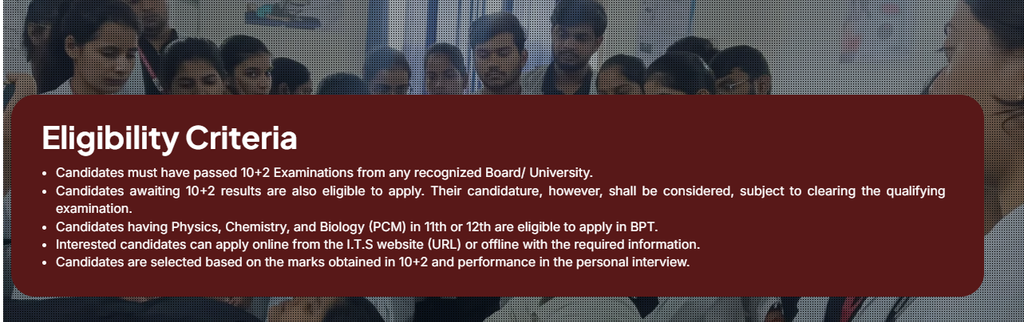
Some colleges admit based on merit (10+2 marks), while others may consider a relevant entrance test. It’s worth calling the admission office directly and confirming the exact process for the year you’re applying, since these details do get updated annually.
Course Duration and What Students Actually Study
A BPT degree typically runs for 5 Years (4 Years Academic + 1 Year Internship), which includes a compulsory 6-month clinical internship at the end. That internship isn’t a formality — it’s where theoretical knowledge turns into actual clinical competence, usually completed at one of the affiliated partner hospitals.
Across the four academic years, students move through subjects like human anatomy, physiology, biomechanics, exercise therapy, electrotherapy, orthopedics, neurology, cardiopulmonary physiotherapy, and community-based rehabilitation. Alongside this, a good Physiotherapy BPT course in Greater Noida builds in structured clinical postings from the early years itself — not just in the final internship — so students aren’t seeing a real patient for the first time only in their last semester.
Beyond academics, many institutes run what’s called a Personal Development Program (PDP), which focuses on communication skills, patient handling, and workplace readiness. It sounds like a small addition, but recruiters notice the difference between a graduate who knows the theory and one who can actually talk to a nervous patient and put them at ease.
Career Scope After BPT: Where Does This Degree Actually Lead?
This is where a lot of parents get nervous, and understandably so — nobody wants their child to spend five-plus years studying only to struggle finding work afterward. Here’s the honest picture: physiotherapy has a genuinely wide career scope, and it’s expanding, not shrinking.
After completing a Physiotherapy BPT course, graduates can work in:
- Hospitals, in departments like orthopedics, neurology, cardiology, and sports medicine
- Rehabilitation centers, working with patients recovering from strokes, accidents, or surgeries
- Sports teams and academies, as sports physiotherapists managing athlete injuries
- Private clinics, either employed or eventually self-owned
- Corporate wellness programs, an increasingly common employer for physio graduates
- Special schools and NGOs, working with children who have developmental or physical disabilities
- Higher education, by pursuing an MPT (Master of Physiotherapy) and moving into specialization or academics
India’s aging population, rising sports culture, and growing awareness around post-surgical rehabilitation mean the demand for trained physiotherapists is only climbing. A student graduating from a well-connected Physiotherapy BPT course in Greater Noida, with real hospital exposure built into their training, isn’t stepping into a saturated job market — they’re stepping into one that’s actively hiring. Physiotherapists are in high demand in countries like Australia, New Zealand, Canada, and many more, so the students even have a good scope of applying for jobs in these countries as well.
Placement Support: What Should Parents Actually Ask About?
Placement cells, sometimes called Corporate Research Centers (CRC), exist to bridge the gap between graduation and employment — organizing internships during the course and campus placement drives closer to final year. Institutions connected to a larger education group often have an advantage here, since their placement network isn’t built from scratch for one department but draws on relationships across multiple industries and healthcare partners.
When you’re evaluating a college, don’t just ask “do you have placements?” — every college will say yes. Ask instead: which hospitals recruited last year, what roles were offered, and can you speak to a recent graduate? Specific answers tell you far more than a generic placement percentage on a website.
Common Questions Parents and Students Ask
- Is physiotherapy a good career for someone who isn’t great at hardcore science subjects?
Physiotherapy does involve anatomy and physiology, but it’s far more applied and practical than, say, MBBS. Students who prefer hands-on learning over pure memorization often do better here than they expected.
- Is the fee for a BPT program manageable compared to other medical courses?
Generally, yes. A BPT degree is significantly more affordable than MBBS or dental programs, while still leading to a recognized, respected healthcare career.
- Does college matter as much as the degree itself?
Honestly, yes — more than most people assume. Two students with the same BPT degree can have very different clinical confidence depending on how much real hospital exposure their college actually provided during the course.
- Can a BPT graduate study further?
Absolutely. Many graduates go on to pursue an MPT in specializations like sports physiotherapy, neuro-rehabilitation, or orthopedic physiotherapy, which opens up higher-paying and more specialized roles.
Making the Final Decision
If your child has an interest in healthcare, human movement, and helping people recover — physiotherapy is a career that rewards exactly those instincts. But college matters. A Physiotherapy BPT course in Greater Noida backed by real hospital tie-ups, experienced faculty, and a structured placement system gives students something a brochure can’t fake: actual readiness to work the day they graduate.
Before finalizing any college, take the time to visit the campus, talk to current students if possible, and ask direct questions about hospital postings and placement outcomes. A decision this important deserves more than a five-minute website scroll — and now, hopefully, you’re equipped to ask the right questions when you make that call.
